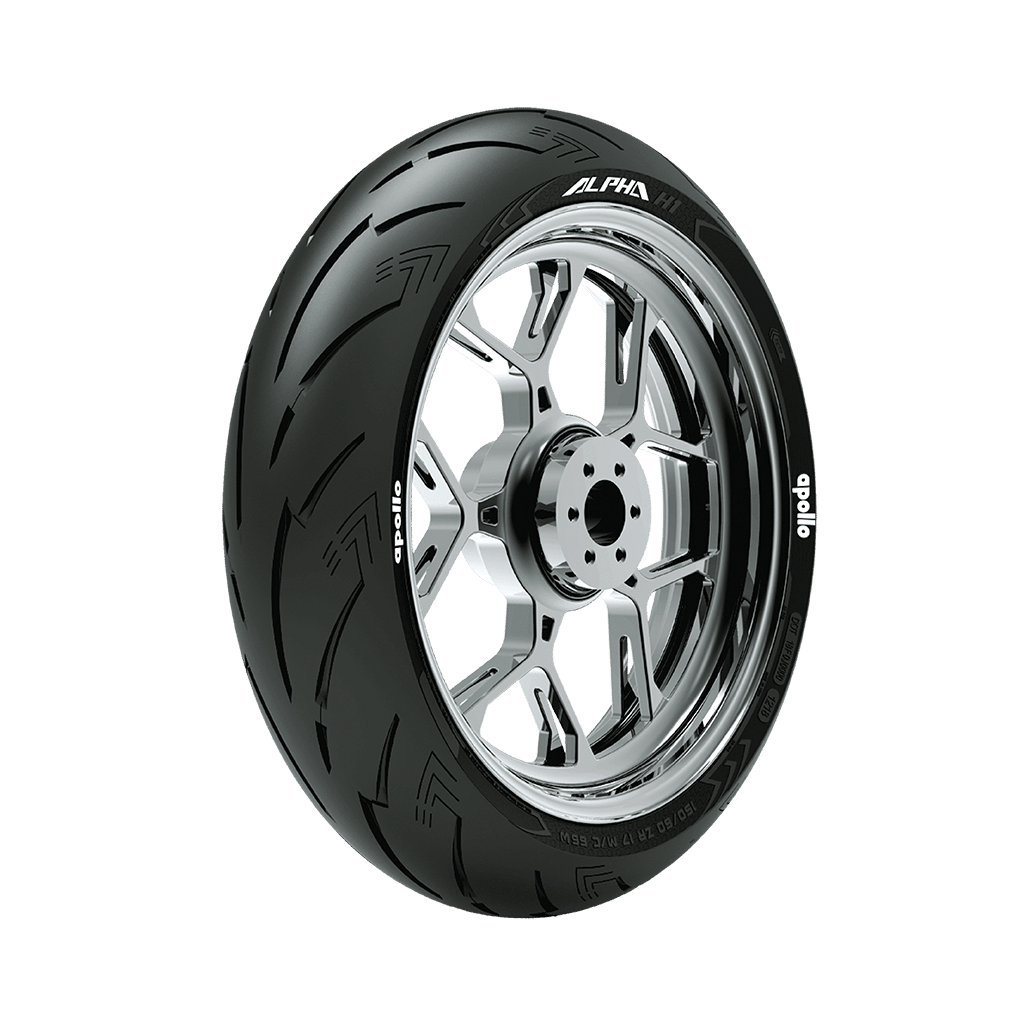
Since it’s launch, the Apollo Alpha H1 tyre has earned a great reputation. This premium offering from an Indian manufacturer combines performance and value, challenging established international brands. And with import restrictions making international options harder to find, the H1 has become a commonly recommended tyre. Let’s take a look at what they do well, and whether they’re still the best choice given that other local competitors have now entered the market.
My Experience
I’ve covered around 50,000km on the Alpha H1s, with the rear tyre usually lasting around 9,000km, so I’ve gone through quite a few sets of H1s. Keep in mind that my aggressive riding style puts a lot more wear on the tyres. If not riding as hard, the average rider should see a much higher tyre life.
I’ve always had a very good dry-road experience with the H1s. They’re extremely stable at high speeds, give you some level of feedback, and they have plenty of cornering grip. The braking experience is also reasonable and they pair very well with sintered brake pads. You can corner right to the edge of the tyre, and generally won’t find the tyre slipping on clean dry tarmac unless the tyre hasn’t warmed up yet.
The H1s are not great in the wet and while they generally grip fairly well on clean wet roads, they can slip quite easily sometimes. While I’ve also had fantastic rain rides on the H1s, especially highway runs that don’t challenge the tyres, I’ve also had a lot of scares and have lost traction on both the front and rear tyre at the same time once. That was fun. Issues with H1s in the wet are a common experience in the riding community and it’s important to understand that even if you’ve had an okay experience with H1s in the wet, there are significantly grippier and safer tyres out there for a similar price.
Positive Feedback
- Reliable Dry Grip: Users consistently praise the Apollo Alpha H1 for its impressive grip levels, particularly on dry surfaces and during cornering. The high-silica reinforced compound enhances grip, translating to increased confidence and stability.
- Dual-Radii Profile: The tyre has a more rounded shape in the center and a sharper profile towards the edges. This helps the bike tip into corners with more urgency and provides a quicker response to steering inputs.
- Braking Performance: The Alpha H1 tyres provide good feedback through the front brake lever, enhancing braking feel and control. And the amount of grip the tyre provides generally results in very good braking performance.
- High-speed Stability: The W-rated, zero-degree steel belt, radial construction reduces deformation at high speeds, maintaining optimal road contact.
- Value for Money: Considering its performance characteristics, the Apollo Alpha H1 offers good value compared to more expensive international brands.
- Availability: While not every place has perfect availability, the Alpha H1 is usually not hard to find.
Negative Feedback
- Heavier Steering: The Alpha H1 is often significantly heavier than stock tyres, making the bike feel less agile. This is not a deal-breaker and is helped somewhat by the aggressive tyre profile mentioned above, but remains a consideration.
- Wet Weather Performance: This is one of the tyre’s biggest weaknesses. While it disperses water effectively, it loses grip quickly on wet surfaces, especially when the road is dirty. Although it performs adequately on clean wet roads, aggressive riding in wet conditions is risky, and even city riding on rainy days can lead to occasional slipping.
Lifespan and Tread Wear
The lifespan of the Alpha H1 varies greatly depending on riding style. Overall, the lifespan is quite good. Users with a relaxed riding style may achieve over 20,000 km, while aggressive riders might see as little as 8,000 km, a reasonable trade-off considering the price and performance.
Comparison to Competitors
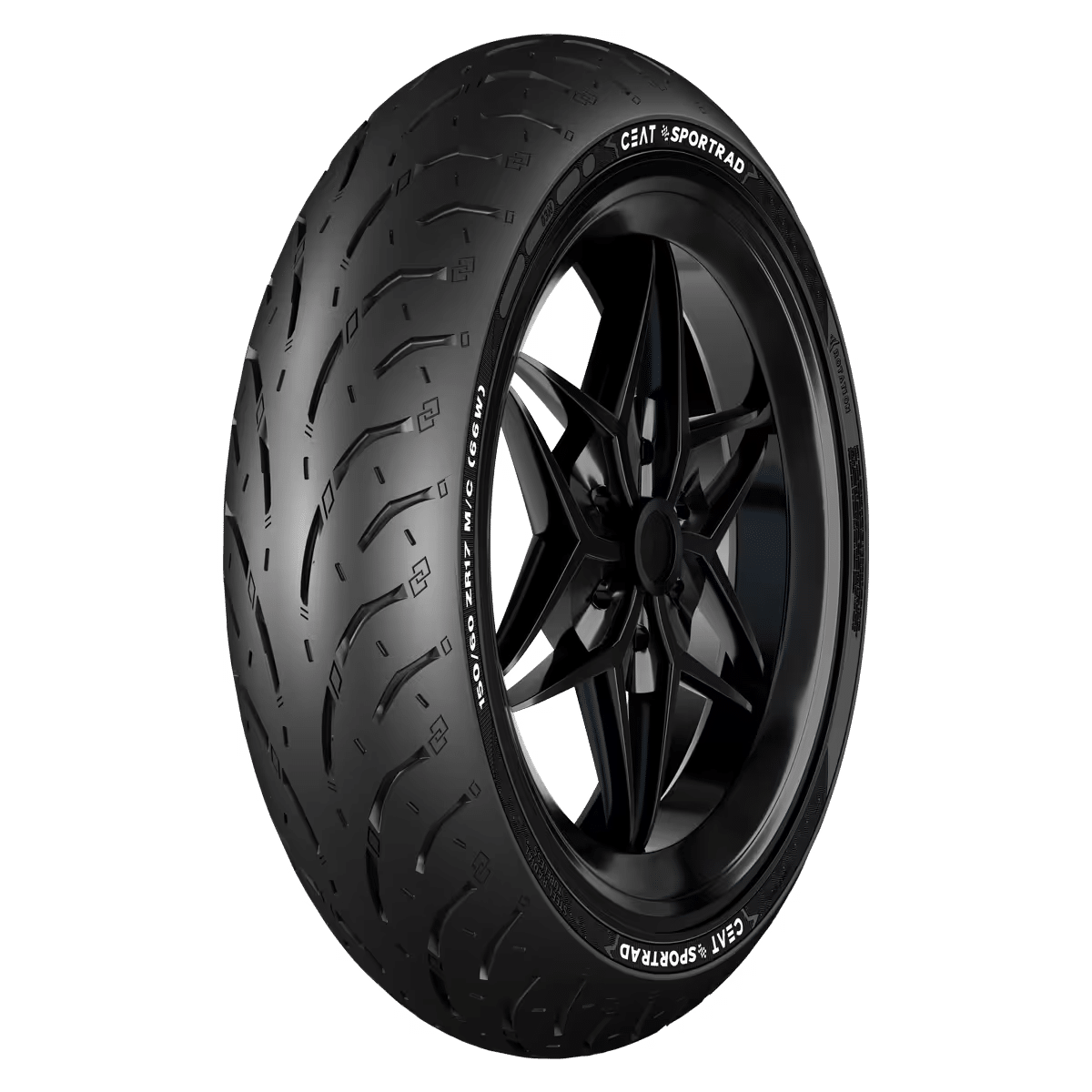
CEAT SportRad: The SportRads surpass the H1s in multiple aspects. Considering the comparable market price, the H1 is no longer a compelling choice. The SportRads offer superior dry and wet grip and provide enhanced feedback across all surfaces, including smooth concrete. This results in them providing the user with much more confidence than the H1s. Think of them as a budget Road 5.
TVS Protorq Extreme: While known to be a very grippy tyre in both dry and wet conditions, the Protorq Extremes are a bit worse at gravel and off-road than both the H1s and SportRads in my opinion. They’re also harder to find in the market. TVS doesn’t even bother to provide these tyres as stock on their own bikes, so while they’re a solid option, especially for track riding, there’s no reason to try and find them if SportRads are available. They’re still a better option than H1s given that they have significantly more wet and dry grip. They can also be considered a budget Road 5.
MRF Steel Brace: Not commonly recommended due to being a bit more expensive and harder to find, but they do have better dry grip than Alpha H1 and initial reports suggest that they’re better in the wet too.
Reise TraceRad: While many Reise tyre models have received a lot of negative user feedback lately, initial reports suggest that the TraceRads have a soft compound that performs quite well. It’s too early to know how it compares to the other options in the market though.
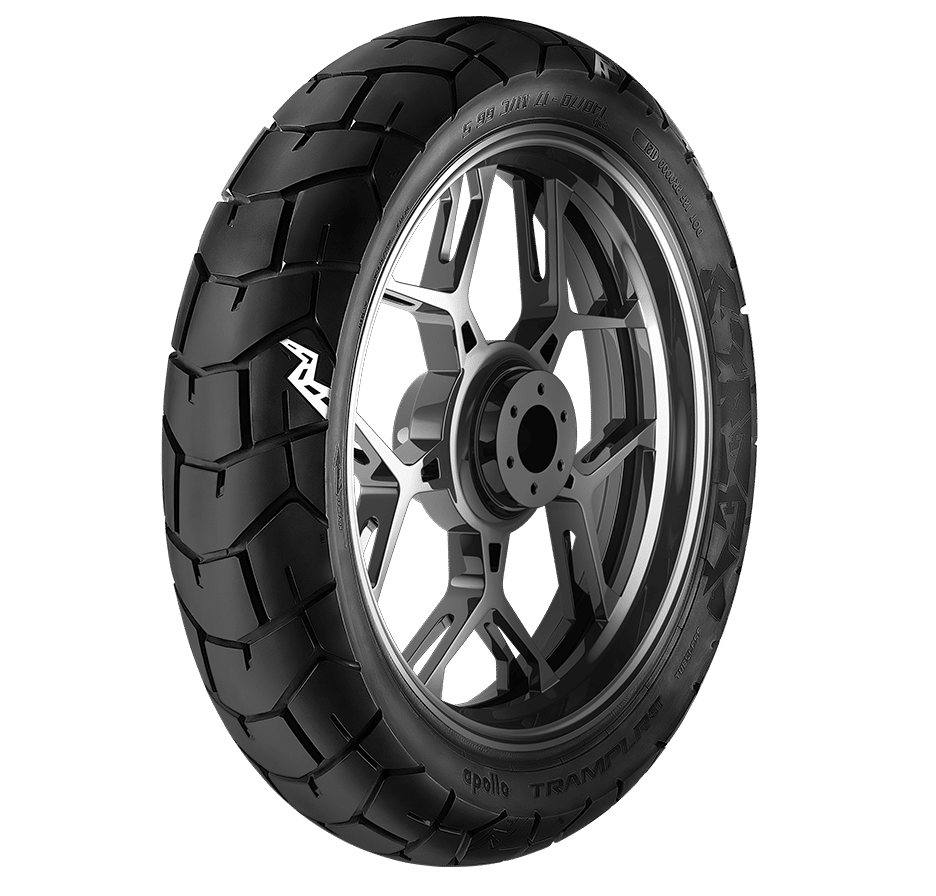
Apollo Tramplr XR: While not a direct competitor to the Alpha H1, the Tramplr XR is a sensible choice for the mixed road conditions encountered daily by most riders. They feature a harder center compound than the H1, increasing tyre life, with the H1’s softer compound on the sides for enhanced cornering grip. The block pattern significantly improves their ability to ride on gravel and dirt, and while not an off-road tyre, their slight off-road focus allows them to perform a lot better than a road tyre on all kinds of terrain. However, the harder center compound slightly increases braking distances, and the blocky pattern elevates tyre noise and diminishes road feedback.
Conclusion
The Apollo Alpha H1 initially emerged as a strong contender. It’s impressive grip levels, improved ride quality, and competitive pricing resonated with many users. They’re still a solid option for riders who can’t find other options in their area, and don’t tend to do much wet-weather riding. However it would be better to consider CEAT SportRad, if you want a full road tyre, or Apollo Tramplr XR, if you tend to face a lot of gravel and bad road conditions on a regular basis.