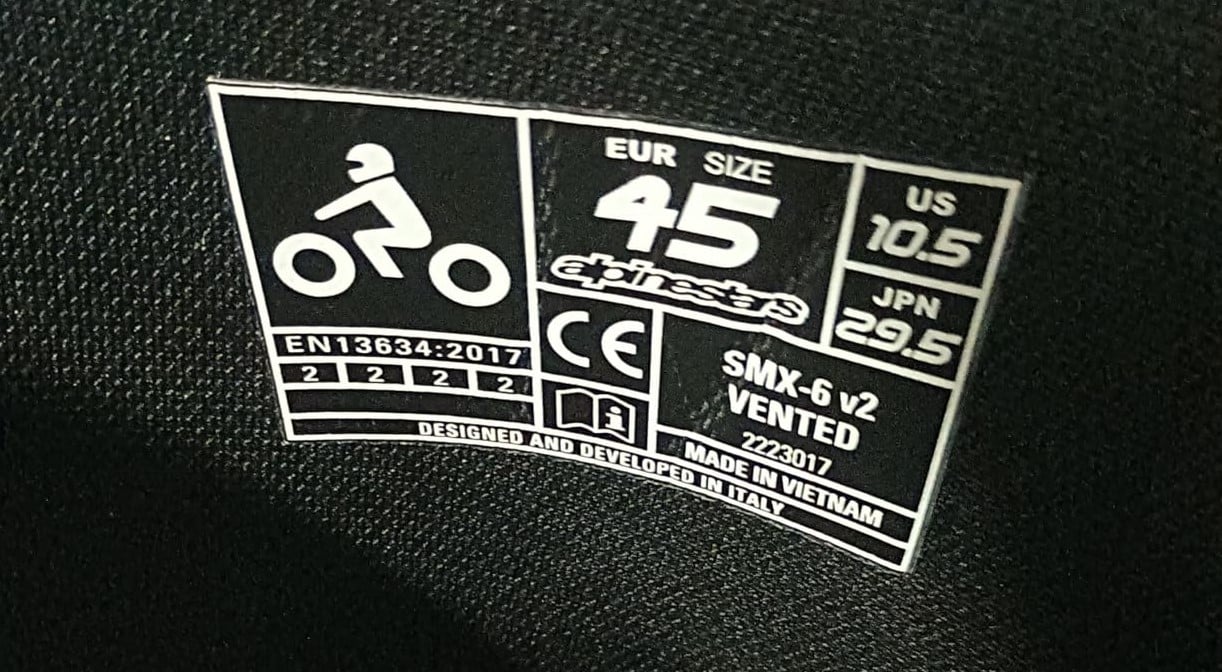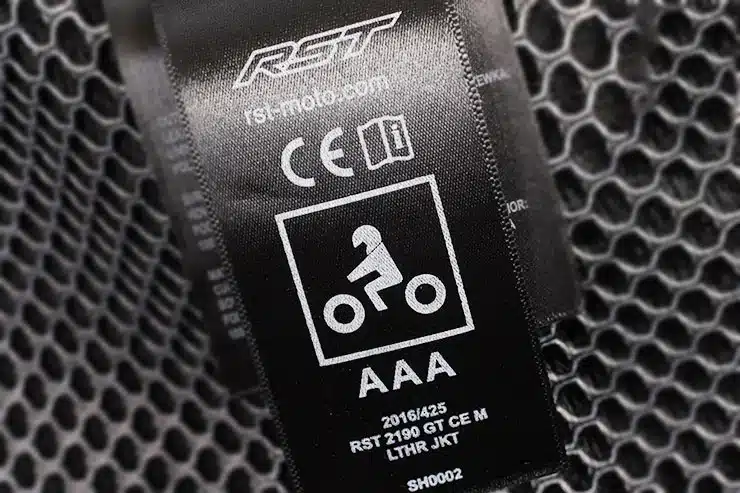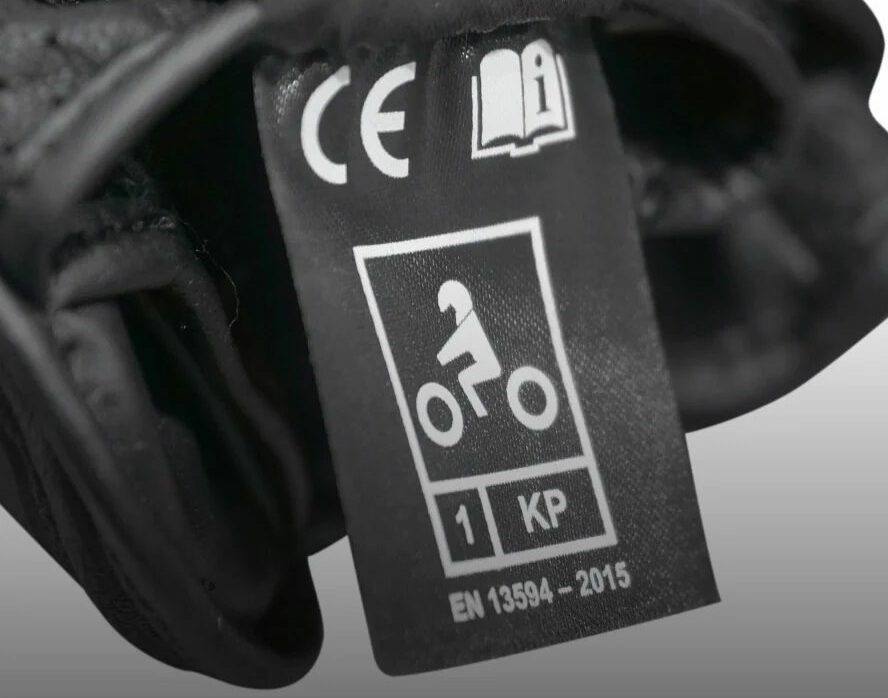
Riding gloves can undergo comprehensive CE certification, which assesses the entire glove’s protective capabilities. The relevant standard for this is EN 13594:2015, specifically designed for motorcyclists’ protective gloves.
This standard evaluates various aspects of the glove, including:
- Impact resistance: Assesses the glove’s ability to absorb and dissipate energy from impacts.
- Abrasion resistance: Measures how well the glove material withstands frictional forces, simulating sliding on pavement.
- Tear strength: Tests the glove’s resistance to tearing under stress.
- Seam strength: Evaluates the durability of the glove’s stitching under tension.
- Restraint: Ensures the glove remains securely on the hand during an accident.
- Cuff length: Verifies that the glove provides adequate coverage to protect the wrist area.
Gloves are classified into two performance levels:
- Level 1: Offers a basic level of protection with greater emphasis on dexterity.
- Level 2: Provides higher protection levels, which may result in reduced dexterity due to increased protective features.
It is important to pay attention when purchasing a riding glove, as some manufacturers may mention CE Level 1 or 2 in relation to the knuckle protector, but the glove itself may lack a CE certification.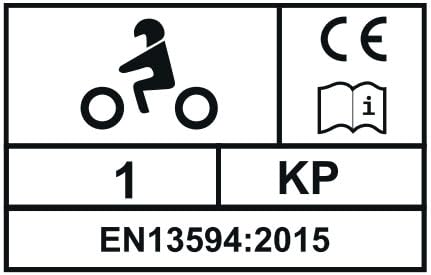
Luckily, quite a few gloves in the market are CE-Certified, even some of the cheaper ones. A full list of the ones we’ve found will be up on this site shortly.