High-quality leather can last for decades, but its longevity depends entirely on how well it’s cared for. Even the toughest motorcycle leather can crack, fade, or lose its protective qualities without proper maintenance. More than just preserving its appearance, caring for your motorcycle leather ensures it continues to provide the safety, comfort, and performance you rely on every time you ride. This guide will walk you through the essential steps to keep your leather gear in peak condition.
Leather is naturally absorbent. It is often treated to give it water resistance, but failing to maintain the leather will allow water to absorb causing it to become stiff and brittle. Dirt and mud also draw out oil and will leave the leather unprotected over time. Even leather on ‘waterproof’ should be maintained if it gets wet, or else it will become less waterproof and have a shorter life.
Things to Keep in Mind:
- Start by reading the manual that comes with your gear, as it will provide specific care instructions for that particular kind of leather, including dos and don’ts.
- Always dry leather first before attempting to clean it, and avoid using heat or sunlight for drying.
- Never use detergents, cleaning sprays, or other harsh cleaning agents on leather.
- Always test any cleaning product or conditioner on a small, hidden area of the leather first to ensure it doesn’t cause discolouration or damage.
Basic Maintenance
If you prefer a low-effort maintenance routine but still understand the need for some care, here’s the quick and easy method:
- Use a shoe brush to remove dirt and dust.
- If needed, use a damp (not wet) cloth to remove any remaining dirt.
- Let the leather dry for some time, without heat and sunlight.
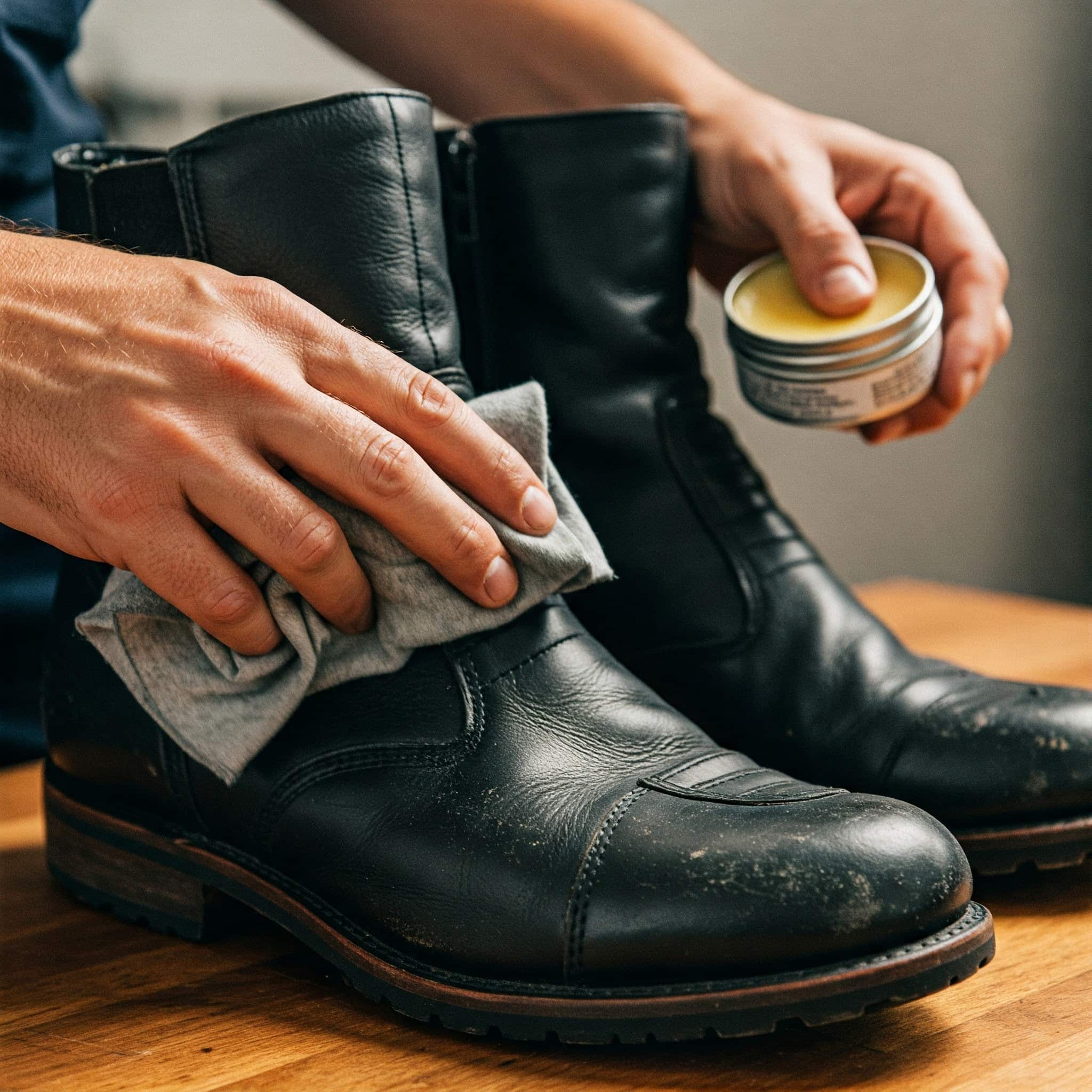
- Apply leather conditioner, allow it to absorb and dry, and then wipe off any excess.
While a dedicated leather conditioner like Putoline Leather Wax or Amaroq Leather Refueler is recommended due to thick motorcycle leather absorbing a lot of oils, normal leather shoe polish can be used in a pinch.
I recommend doing this once every month or two. However, if your gear gets dirty, or soaked during monsoon season, allow it to dry naturally and then condition it as soon as possible.
Deep Cleaning
While the quick method is sufficient for basic upkeep, a more thorough cleaning will significantly extend the life of your gear. Cleaning it thoroughly before conditioning allows the leather to absorb the oils more effectively, improving its water resistance and overall health. Ideally, give your leather a deep clean every 3-6 months, or more frequently if you ride in harsh conditions where the leather gets wet or dirty.
Cleaning
Things You’ll Need
- 2 soft cotton cloths (microfiber is okay for cleaning but will absorb and waste conditioner)
- A small bowl of water
- A soft-bristle toothbrush (ideal for cleaning intricate areas like stitching, seams, and crevices)
- Leather cleaner or saddle soap
- Leather conditioner (options like Putoline Leather Wax or Amaroq Leather Refueler are excellent for restoring moisture and protecting the leather)
- Dampen one of the cotton cloths with water (ensure it’s damp, not soaking wet, to avoid harming the leather). For heavily soiled areas or intricate details, use the soft-bristle toothbrush.
- Dip the damp cloth or toothbrush into the saddle soap or leather cleaner and work it into a gentle lather. Apply the lather to the leather using small, circular motions, lifting dirt, salt stains (from sweat), and surface grime without causing damage.
- Pay close attention to areas like the gussets of boots, the spaces between glove fingers, and any stitching or seams. The toothbrush is ideal for these tight spaces where dirt tends to accumulate.
- After cleaning an area, use the second clean, dry cloth to wipe away any excess cleaner or soap residue. This prevents product buildup, which can attract more dirt over time.
Drying
- After cleaning, gently blot (don’t rub!) any excess water. Allow the leather to dry completely at room temperature, avoiding direct heat sources like hairdryers, which can cause cracking and damage.
- When drying items like gloves and boots, stuff them with crumpled newspaper. This helps them maintain their shape while absorbing moisture from the inside.
- Place your leather items in the shade, away from direct sunlight. A shaded balcony is an ideal location because it provides good airflow to assist with drying.
Conditioning
- Once the leather is completely dry, apply a high-quality leather conditioner, such as Putoline Leather Wax or Amaroq Leather Refueler. This will restore moisture and maintain the leather’s suppleness. Use a clean, soft cloth to buff the conditioner into the leather using gentle, circular motions.
- Give the leather an hour or so to absorb as much of the conditioner as it can, and then wipe off any excess conditioner with a clean cloth.
Storage
- Before storing your leather gear for an extended period, make sure it is well-conditioned or you might find it cracked and crumbling when you go to use it again.
- Store your leather gear in a cool, dry place, away from direct heat, humidity, sunlight, and dust. Ideally, use a breathable fabric bag or box (avoid plastic).
- Add a few desiccant sachets, such as silica gel, to help absorb moisture.
- Naphthalene balls can also be used to prevent mould growth.
- Store boots upright with crumpled newspaper inside to help them retain their shape.
- Periodically air out your gear and check for any signs of mould growth.
Personal Experience
I personally own a pair of RYO T-REX boots, TCX CABO WP boots, Scala Trekker gloves, and Rynox UrbanX gloves. By following these steps and using the recommended cleaners and conditioners, I’ve managed to keep them in excellent condition for years.